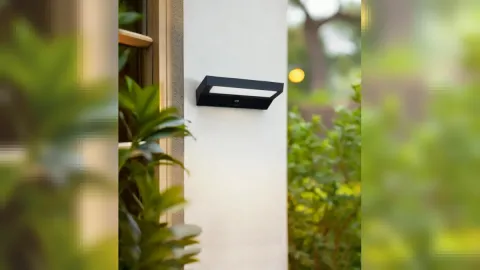
PULSAR Solar Wall Light: Sheds, Back Doors and Outbuildings
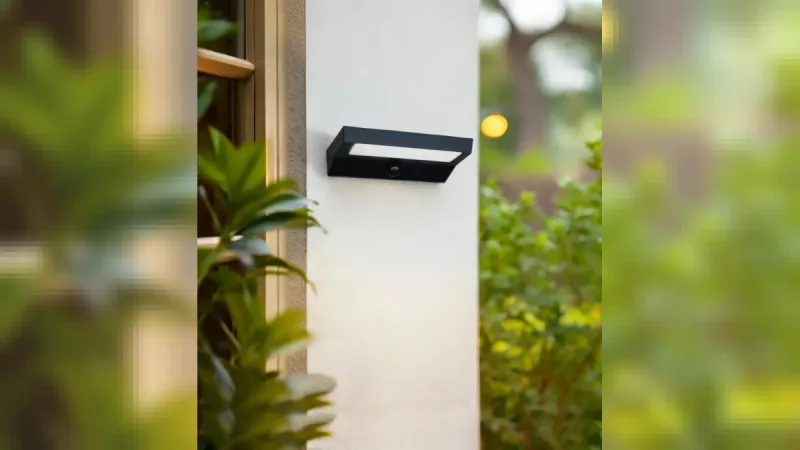
Plenty of homes in rural France, Spain and Portugal come with a barn, a wood store or a garden shed that has never had electricity. Running a cable out there costs more than most of what's stored inside. A solar wall light with a motion sensor solves the "fumbling for the padlock in the dark" problem for under €40, as long as you put it on the right wall.
Short answer
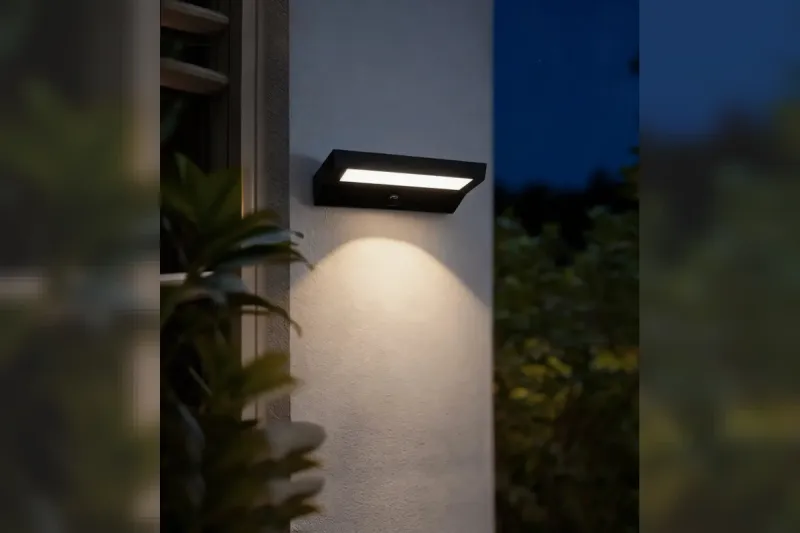
PULSAR is a slim black wall light (20.3 × 10 × 4 cm) with its panel built into the top, an 8 m motion sensor and modes up to 1000 lumens. €39.90 on lumihome.com (Nov. 5, 2026). Mount it on a south-, east- or west-facing wall around 1.8 to 2.2 m up. On a north wall the built-in panel will barely charge from October to March.
Where it ships: Lumihome delivers to France, Belgium, Germany, Spain, Italy, the Netherlands and Portugal only. Not the UK, Ireland, Switzerland or anywhere outside the EU (as listed on lumihome.com on Nov. 5, 2026; check their site on the day).

Which wall to use
| Wall faces | Winter charging | Verdict |
|---|---|---|
| South | Best: low winter sun hits it most of the day | Ideal |
| East or west | Half a day of sun, weaker in winter | Fine; use motion-only mode in winter |
| North | Almost no direct sun in winter at European latitudes | Avoid, or choose a light with a separate panel |
| Under a deep roof overhang | Panel shaded even on a south wall | Move it out from under the eaves |
Mounting height and the sensor
- 1.8 to 2.2 m is the sweet spot. High enough to light the door and the ground in front of it, low enough for the 90° sensor to notice someone approaching.
- Higher means wider light, shorter detection. Above about 2.5 m the sensor looks over people's heads at the near edge.
- Aim the sensor along your approach. PIR sensors notice people crossing their view more readily than people walking straight at them.
- Keep it off the street side if passing cars or people would set it off all evening.
Winter settings
The chart below uses the EU Joint Research Centre's PVGIS data. On a flat panel, a December day in Paris delivers about 16% of the solar energy of a June day. Brussels, Amsterdam and Berlin get 10–13%. Lisbon, Madrid and Rome keep 25–29%. When a product page says "recharges in 6 to 8 hours", it means a sunny day, not a northern winter.
- Use mode 3 (motion only) from November to February anywhere north of the Massif Central. It only spends energy when you're there.
- Don't judge it in the first week. Give it 1 to 2 sunny days to charge fully before deciding it's weak.
- Brush snow off the top. On a wall light the panel is the top surface, so snow and leaves collect right on it.
Who it suits, who it doesn't
Good fit: sheds, wood stores, garages and gates without power; back doors and bin areas; holiday homes where you don't want wiring work.
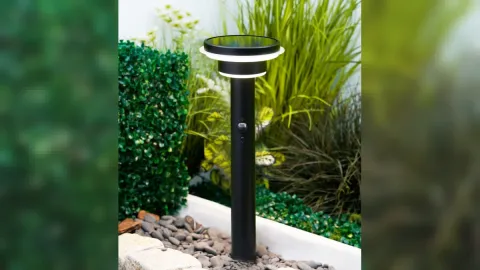
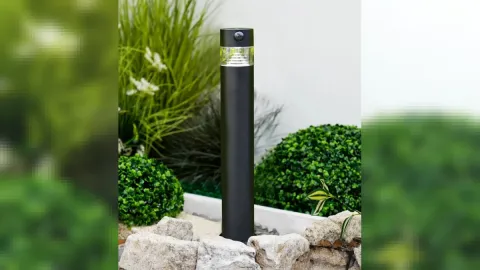
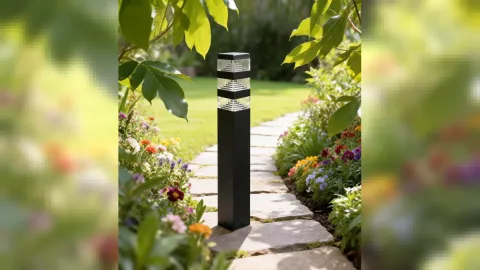
Pick something else if: the only available wall faces north; you want a light that stays on all evening (wired lights do that); or you're lighting a long driveway (see the Pyramide 1500 bollard). For a path leading to the shed, pair it with a GENOVA or a row of ORION posts.
Questions
How many burst cycles does a full charge give?
Lumihome lists about 100 cycles of 25 seconds. Its spec sheet quotes those cycles at 600 lumens while the modes go to 1000, so treat 100 as an upper figure.
Is IP44 enough for a wall?
Yes for rain. Don't point a pressure washer at it.
Can I swap the battery?
It uses a 3.7 V, 2200 mAh lithium-ion cell. The two-year guarantee excludes the battery.
Can I get it in Ireland?
No. Delivery is to France, Belgium, Germany, Spain, Italy, the Netherlands and Portugal only.
Specs and price checked on lumihome.com on Nov. 5, 2026. Placement advice is general practice for solar and PIR lights; winter figures are estimates from EU PVGIS data.